
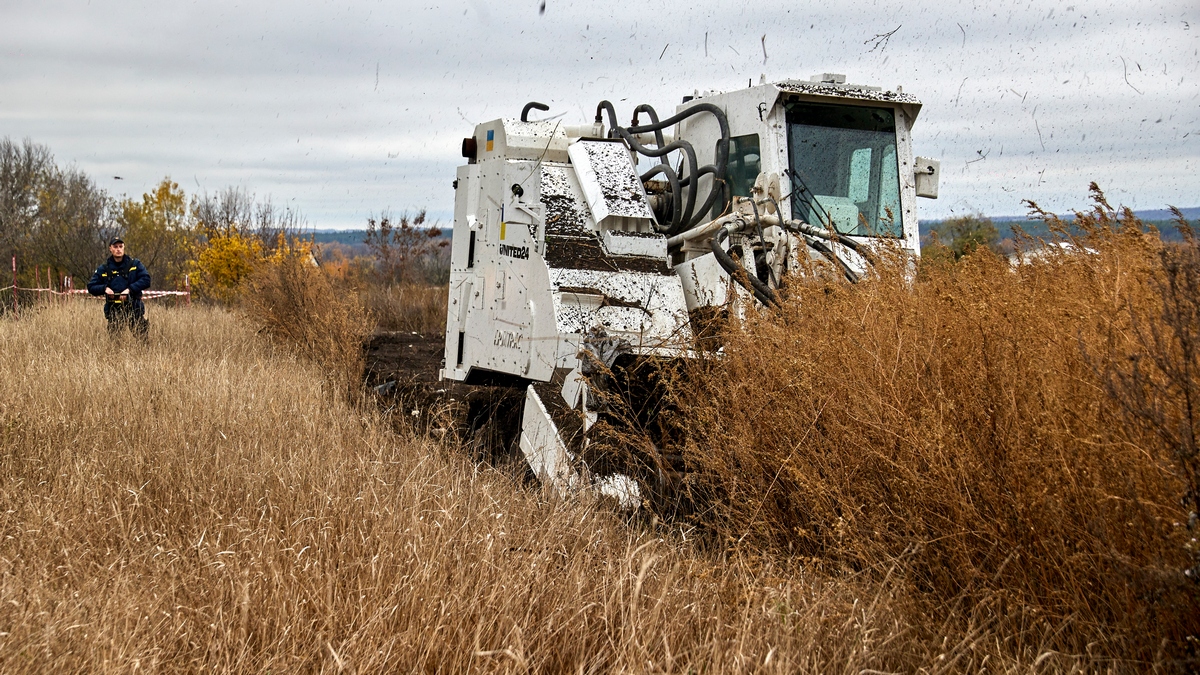
Despite the Ukrainian government fully covering the costs of official mine clearance operations, a significant shadow market for demining services has emerged across the country. Landowners and agricultural enterprises, frustrated by lengthy waiting times and bureaucratic procedures, are increasingly turning to unofficial operators to clear their fields of explosive remnants of war. This parallel economy in demining has grown substantially since the beginning of the full-scale Russian invasion in February 2022, creating serious safety concerns and legal complications for all parties involved.
The scale of Ukraine’s landmine problem is staggering. According to various estimates, between 30 and 40 percent of Ukrainian territory may be contaminated with mines, unexploded ordnance, and other explosive remnants of war. This makes Ukraine one of the most heavily mined countries in the world, rivaling or even surpassing historical hotspots like Afghanistan and Cambodia. The contamination affects millions of hectares of agricultural land, threatening Ukraine’s position as one of the world’s leading grain exporters and creating an economic crisis that extends far beyond immediate security concerns.
The Economics Behind Illegal Demining
The primary driver behind the shadow demining market is time. Official state demining operations, while free of charge for landowners, can take months or even years to complete due to the enormous backlog of requests. For agricultural enterprises, this delay translates directly into lost harvests and mounting financial losses. A single season of missed planting can cost farmers hundreds of thousands of dollars, making the risk of hiring unofficial deminers seem economically justified despite the legal and safety implications.
Unofficial demining services reportedly charge anywhere from 50 to 200 dollars per hectare, depending on the suspected level of contamination and the region. While this represents a significant expense for farmers, many consider it a worthwhile investment compared to watching their fields lie fallow indefinitely. Some estimates suggest that the shadow demining market processes more land annually than official state programs, though exact figures are impossible to verify due to the clandestine nature of these operations.
Safety Concerns and Human Cost
The most alarming aspect of illegal demining is the safety risk it poses. Official demining operations employ trained specialists using certified equipment and following strict international protocols established by organizations like the United Nations Mine Action Service. Shadow market operators, by contrast, often work with minimal protective equipment, inadequate training, and improvised methods. Many are former military personnel or volunteers with some explosives experience, but lacking the systematic training required for safe mine clearance work.
The human cost of this unregulated industry has been severe. Numerous deaths and serious injuries have been reported among illegal deminers, though comprehensive statistics remain unavailable. Each casualty represents not only a personal tragedy but also a failure of the system to provide timely legitimate alternatives. Furthermore, improperly cleared land can remain dangerous, putting future workers and residents at risk from explosives that were missed or improperly handled during amateur clearance attempts.
Government Response and International Support
Ukrainian authorities face a difficult balancing act. While they have increased funding for official demining programs and welcomed international assistance from organizations like the HALO Trust and Danish Demining Group, the scale of contamination far exceeds current capacity. The government has announced plans to train thousands of additional deminers and acquire more equipment, but building this capacity takes time that many landowners feel they don’t have.
International partners have pledged substantial support for Ukraine’s demining efforts. The European Union, United States, Japan, and numerous other countries have committed funding and technical assistance. However, experts estimate that fully clearing Ukraine’s territory could take decades and cost tens of billions of dollars even under optimal conditions. This timeline conflicts sharply with the immediate economic pressures facing Ukrainian agriculture, helping explain why the shadow market continues to thrive despite government efforts and the obvious dangers involved.
Expert Opinion: The emergence of a shadow demining market in Ukraine represents a critical failure point in humanitarian response that requires urgent systemic solutions. Without dramatic scaling of official demining capacity and potential interim solutions such as agricultural insurance programs or compensation for idle land, the illegal market will continue to grow, resulting in more casualties and potentially leaving dangerous unexploded ordnance in supposedly cleared fields. International donors should prioritize not just funding but rapid deployment capacity to close the gap between demand and legitimate supply.